Learning from Place
Every place carries knowledge.
In its landscapes.
In its people.
In its materials.
In its stories.
In its plants.
In its ways of living.
So I begin with what is already there.
What does this place know?
What does it make possible for childhood?
What do children notice, discover and come to understand through their relationship with it?
When place stops being a backdrop, it becomes part of the experience of childhood.
ILHABELA · BRAZIL
In Ilhabela, in the Bay of Castelhanos, the river became a sea of pirates.
The children had found a chest full of gold on an enchanted island.
Surfboards became ships. Sticks became weapons. Sounds, words, gestures and stories heard from the elders entered their adventure.
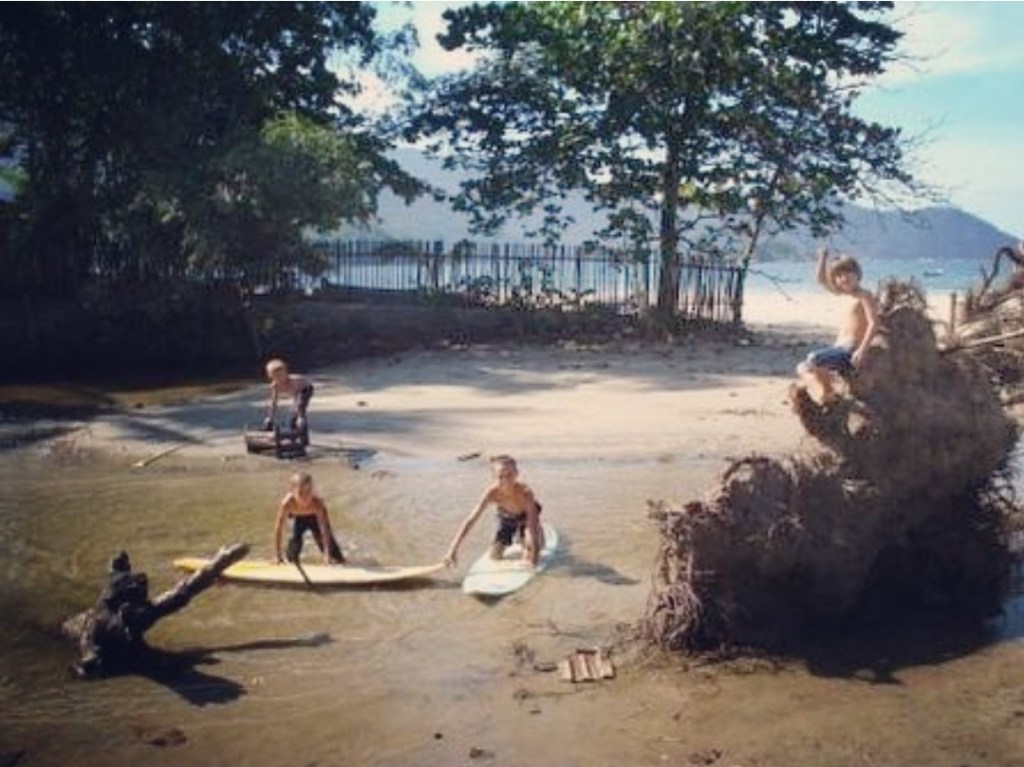
They divided into groups. There was treasure, rivalry, enemies.
Until a duck appeared to steal their jewels. For a few moments, the enemies joined forces to drive the pirate away.
I watched.
In that play, the whole place was present: the landscape, the stories, the ways of living, what came from the elders, and what arrived from the world beyond.
Childhood carries all of this in deep layers.
A memory that does not need to be taught in order to emerge.
It appears through the body, through materials, through the images children create and the stories they invent.
Perhaps this is how a culture continues into the future — within the children who reinvent it.
How can children grow towards the future without losing their relationship with the place they come from?

